
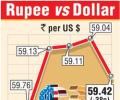
The currency fell 3.4 per cent this week, and is below the levels at which it was trading on July 15 when the Reserve Bank of India unveiled its cash tightening steps to defend the currency.
The RBI stipulated on Thursday that foreign institutional investors would require a mandate from participatory note holders to hedge on their behalf.
Forex dealers will keenly watch, instead, if the central bank indicates more measures to stabilise the currency or gives a timeframe for its current action.

The rupee fell on Monday on fears of foreign outflows after stronger-than-expected US jobs growth data cemented expectations of an early end to US stimulus measures.

The RBI Governor says he does not have a specific foreign exchange rate target, which raises concerns that the central bank is unlikely to defend any particular level strongly.

RBI cannot aggressively intervene at this stage says the report.

The problems are being compounded by perceptions that India is ill suited to defend the currency in the near-term.

India's unstable politics and slow pace of reforms add to the downside risks said the bank's note.

The intervention was spotted when the rupee hit 59.90 to the dollar or below

Heightened volatility makes the debt rollovers difficult.

RBI will auction Rs 1,000 crore worth of these bonds next Tuesday.

Can the Indian hedge fund managers convince the wealthy to take up the expensive investment strategy?
While the country imposed limits, it also eased and simplified other restriction to attract foreign inflows. This is done to plug record current account deficit.

India has taken several measures to ease restrictions for foreign investors in domestic debt markets. They still feel it's not enough. Here's why

It feels govt may find it challenging to meet the revenue projections.

Domestic and external environment still remain "challenging".

Says the TRC proposal was clumsily worded.

Expected cut in withholding tax for debt investments.

India taxes these investors higher and is excessively cautious towards derivatives.

HSBC cut its GDP forecast for the year ending in March to 5.2 per cent from 5.7 per cent, and its forecast for the next fiscal year to 6.2 per cent from 6.9 per cent, according to a report released on Thursday.
 © 2026 Rediff.com - Advertise with us - Disclaimer - Privacy Policy - Sitemap - Feedback - About us - Terms of use - Grievances